
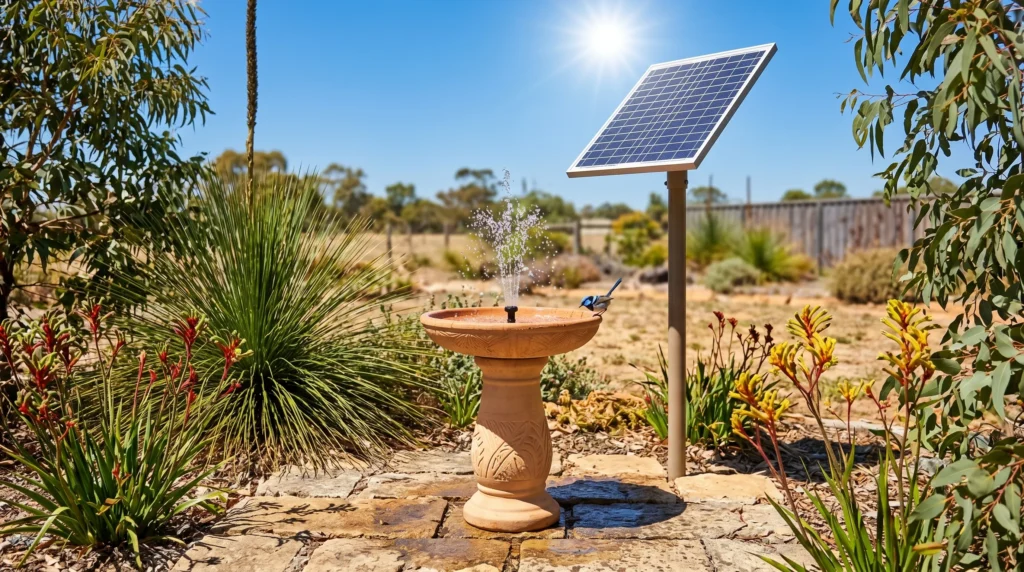
Australia’s climate is among the harshest in the world. Intense sunlight, high temperatures, coastal salt exposure, and seasonal variations all place significant demands on outdoor products.
When selecting a solar fountain, it is essential to choose a model that is not only visually appealing but also capable of withstanding these conditions over the long term.
This guide provides a detailed breakdown of what to look for when purchasing a durable, high-performance solar fountain in Australia.
Prolonged exposure to strong sunlight can degrade materials, causing fading, cracking, and brittleness.
High temperatures affect:
Salt air accelerates corrosion in inferior materials.
Can clog pumps and reduce performance.
Material quality is one of the strongest indicators of long-term performance.
The pump is the heart of the fountain.
High-quality pumps operate quietly and consistently.
A high-performance solar panel should:
Larger panels generally provide better performance.
Not all solar fountains include battery storage.
For Australian conditions, battery-backed systems are often preferable.
Efficient water circulation ensures:
Poor circulation leads to:
To ensure long-term performance, look for:
Many inexpensive fountains are:
Warning signs include:
Regular maintenance includes:
A well-maintained fountain will last significantly longer.
Compact units with moderate flow are sufficient.
Require larger, more powerful systems.
Benefit from minimalist designs.
Suit classic or ornate fountains.
As with most outdoor products, there is a clear distinction between:
Investing in a high-quality solar fountain results in:
Choosing the right solar fountain involves more than selecting a design. It requires careful consideration of:
For Australian homeowners, where outdoor elements can be unforgiving, selecting a premium solar fountain is the key to achieving both beauty and reliability.
A well-chosen fountain will not only enhance the space—it will continue to perform and impress for years to come.